
DyNAtrix is a synthetic hydrogel for 3D cell culture and organoids. No animal-derived components, no undefined growth factors, no lot-to-lot variation. Embed cells easily, image directly in the gel, and dissolve cleanly when you're ready to harvest. Easy peasy!
Chemically defined
Xeno-free & synthetic. Aligns with NAMs initiative and supports animal-free research.
Similar to Matrigel workflow
Simple protocol mimicking
Matrigel handling. Quick
adaptation to your exsiting
workflow.
Simple & gentle cell release

Harvest cells gently while
maintaining high vaibility at 37°C for 30 min in cell culture medium .
Optically transparent

DyNAtrix is compatible with fluorescent microscopy, confocal, and light-sheet imaging.
Independently tunable

Unprecedented control over stiffness and viscoelastic properties
Bioprintable

Self-healing and injectable. Suitable for extrusion printing as bio-ink.
Reproducible
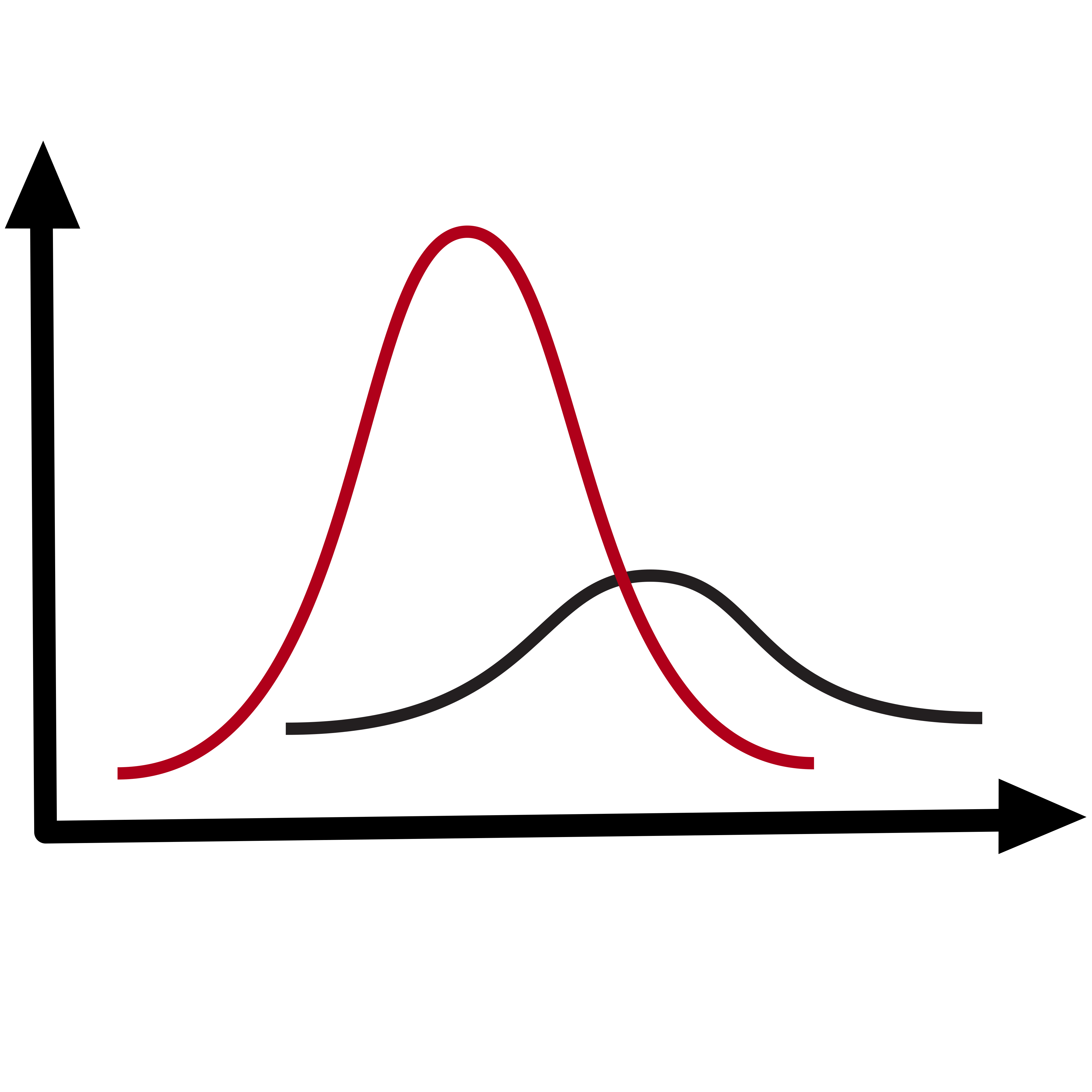
Guaranteed batch-to-batch consistency. One less thing to worry about.
Long term shelf stable

DyNAtrix is stable for long-term cell culture (> 60 days), and storage at 4°C for > 6 months.
Permeable

Low fouling and highly permeable for antibody staining in gels.
Designed to fit into your existing 3D culture setup. Same steps as basement membrane matrices.
But, with better-defined chemistry underneath.
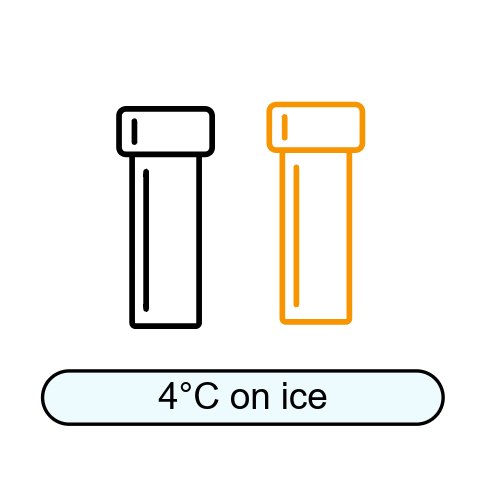
Step 1: Mix precursors & cells

Step 2:Incubate at 37°C

Step 3: Culture and image

Step 4: Release cells (optional)
Mixing and gelation
DyNAtrix precursors exhibit a liquid-like consistency prior to mixing. Hydrogel formation is initiated by combining precursor B+ with precursor X, followed by incubation at 37°C. This procedure is designed to closely resemble the standard Matrigel protocol.
Imaging and analysis
Hydrogels can be imaged directly during ongoing culture. Alternatively, fixation and staining procedures can be performed within the hydrogel matrix without prior cell recovery.
Cell release
DyNAtrix hydrogels can be gently degraded in cell culture medium at 37°C using DNase I, enabling the recovery of cells with high viability for downstream analyses or subsequent passaging.
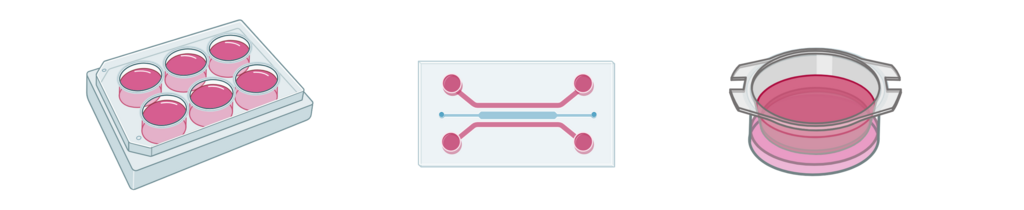
DyNAtrix is flexible. Use it in your existing labware without adapting your setup.
Tested in the following human and mammalian systems. Don't see yours? That's what the pilot programme is for.
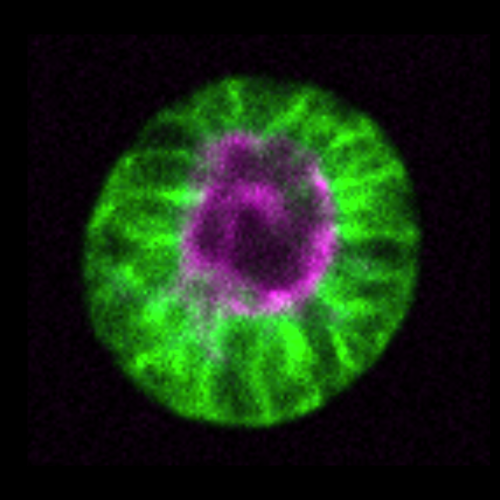
Kidney Cysts
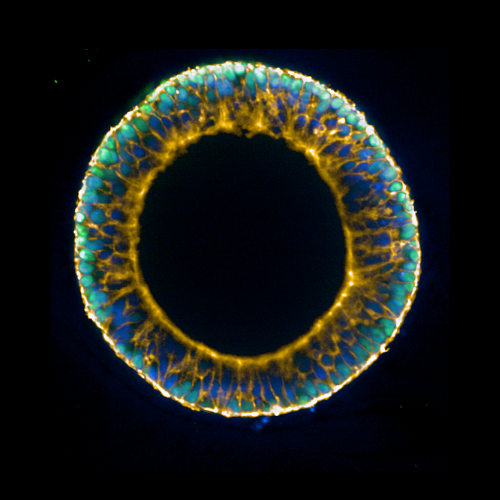
iPSCs
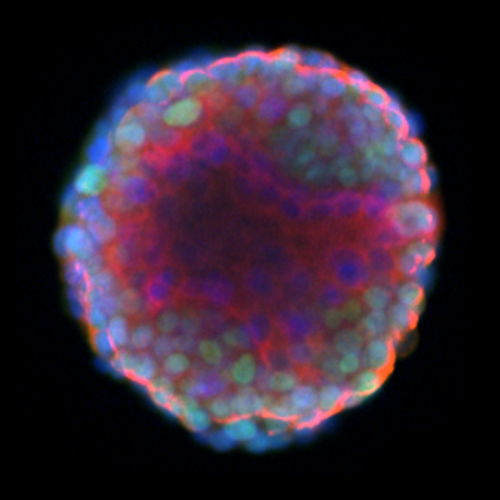
Placenta organoids
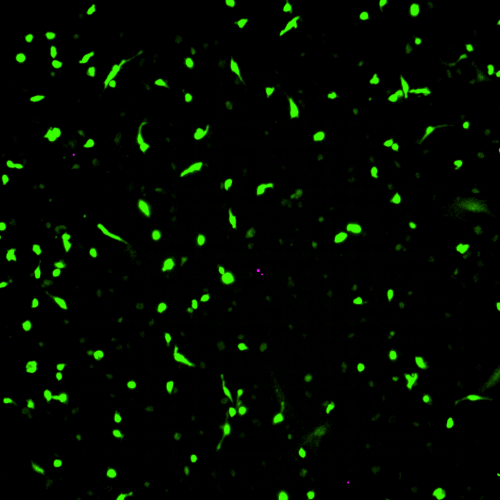
Mesenchymal Stem cells
Two kits to get you started. Both include protocols and direct support from our team.
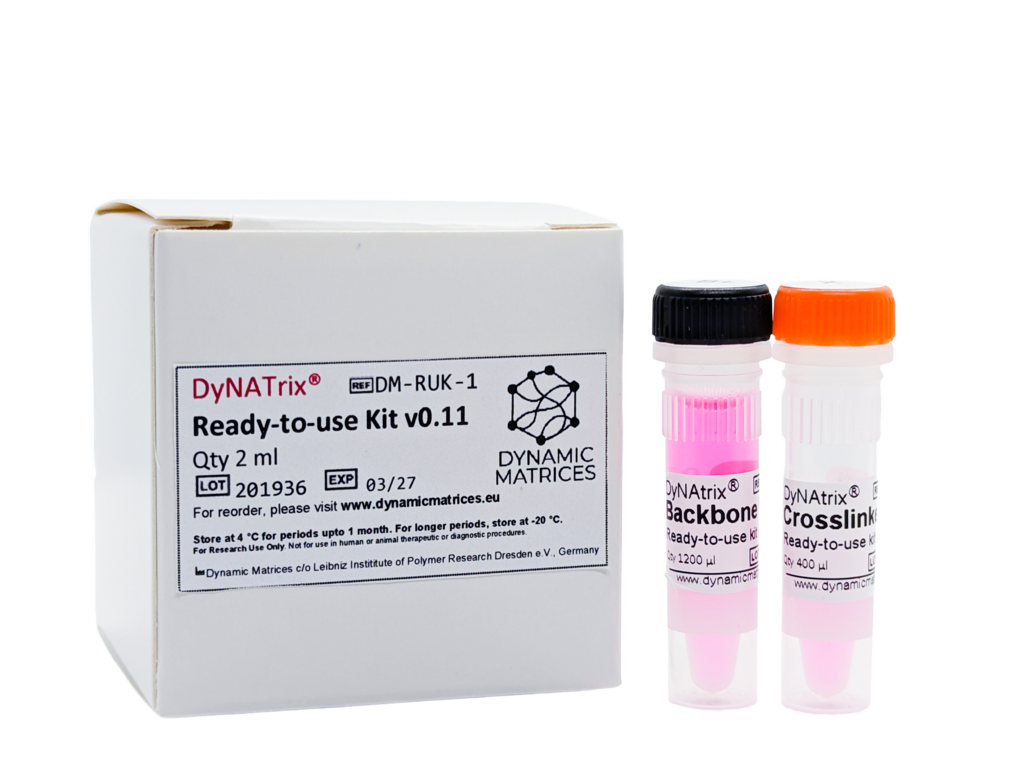
Ready-to-use kit
✓ Ready to mix with cell suspension. No extra prep
✓ Supports wide range of cell types and vessels
✓ Protocol analogous to Matrigel handling
✓ Powder stable at 4°C for > 6 months
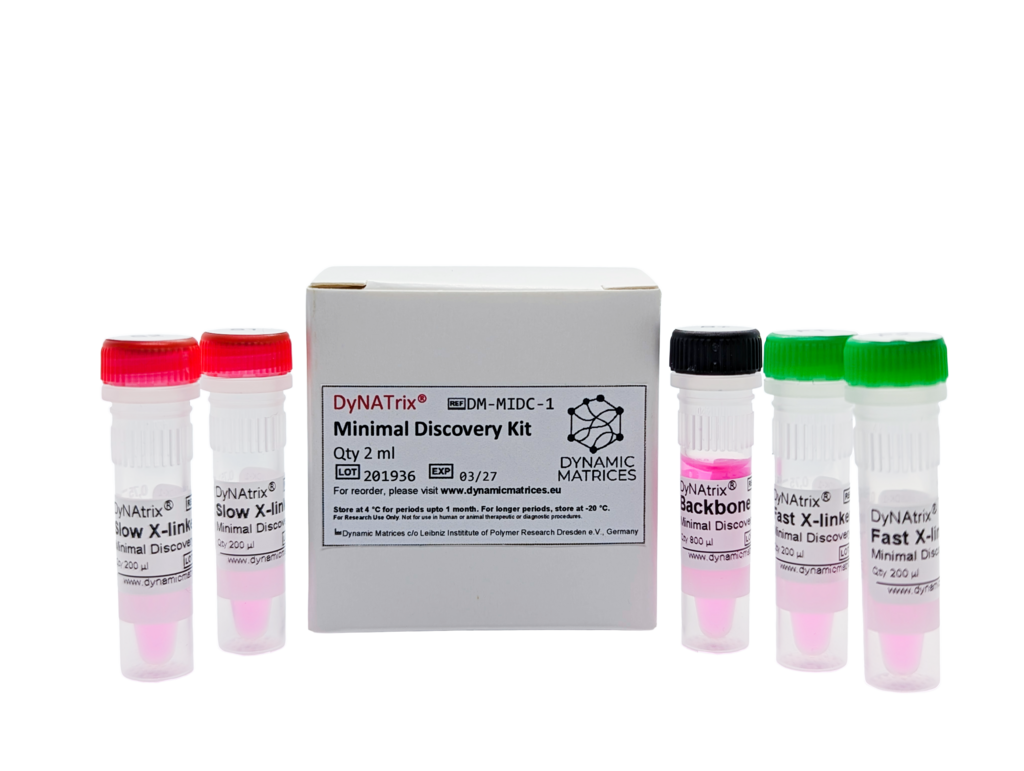
Minimal discovery kit
Change stress relaxation properties between cell culture conditions without re-embedding.

Visualise cell-generated forces directly in 3D hydrogels using built-in fluorescent tension probes.